Transformation and innovation help China's intangible cultural heritage find consumers hungry for fresh experiences, Yang Feiyue reports in Suzhou, Jiangsu.
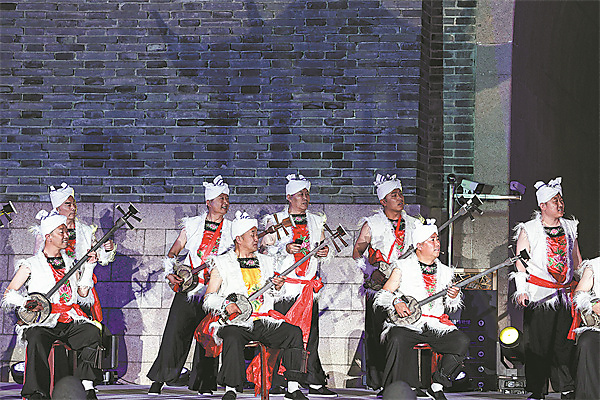 |
| A folk performance marks the opening of the 2026 Intangible Cultural Heritage Summer Shopping Month, which kicked off on June 11 in Suzhou, Jiangsu Province. [China Daily] |
Zhou Jing was holding a bowl of noodles at a booth on the historical Pingjiang Road in Suzhou, Jiangsu Province, where crowds flowed along the ancient stone-paved street on a muggy June afternoon. At first glance, it did not look like a typical local dish. The bowl was made entirely of plush fabric and weighed almost nothing. Even the braised pork topping was soft and fuzzy.
And yet, around her, staff members engaged visitors in mock noodle-shop interactions.
"Hard noodles or soft? Extra broth or light?"
For many visitors, the questions were unfamiliar. That was by design.
Small cards and props at the booth explained the specialized vocabulary of Suzhou noodle culture: kuan tang (extra broth), jin tang (less broth), zhong mian (extra noodles), and shao mian (fewer noodles). In 2020, Suzhou-style noodle-making was added to the city's intangible cultural heritage (ICH) list, adding another layer to this seemingly simple interaction. For local regulars, these terms signal identity as much as taste. For outsiders, they offer a quick introduction to one of the city's best-loved traditions.
The experience was designed to be memorable — a playful encounter that transforms a local culinary custom into an interactive cultural lesson.
Zhou's booth was among the busiest attractions at the 2026 Intangible Cultural Heritage Summer Shopping Month, which opened on June 11 in Suzhou. Held along Pingjiang Road, a canal-side neighborhood lined with white-walled houses and black-tiled roofs, the event forms part of a nationwide campaign featuring more than 1,200 activities held through late July, aimed at bringing traditional culture closer to contemporary life.
For Zhou, a former travel entrepreneur who once specialized in European tours, the plush noodle bowl represents more than a novelty product. It is part of a growing movement across China that is reimagining how intangible cultural heritage is preserved, presented, and passed on to younger generations.
Across the country, cultural entrepreneurs and heritage inheritors are increasingly turning traditional crafts, foods and folklore into collectible toys, lifestyle products and social-media-friendly cultural IPs (intellectual property).
The transformation of Pingjiang Road into a sprawling heritage marketplace offers a glimpse of that shift.
Creative Inspiration
More than 100 heritage workshops and inheritors from across China gathered for the shopping month's main event, showcasing everything from embroidery and ceramics to weaving, sculpture and traditional foods.
Among them was Zhou's collection of plush noodle bowls, refrigerator magnets and blind boxes inspired by the local food culture.
Before the COVID-19 pandemic, Zhou operated a travel business serving Chinese tourists visiting Europe and international visitors coming to China. When global tourism ground to a halt in 2020, she began exploring opportunities closer to home.
"There weren't many cultural products that truly reflected Suzhou's local character and everyday life," she says. "I wanted to create something people could connect with."
Her workshop is located in the Dinghuisi alley in Suzhou's old town. Nearby, heritage masters regularly give public demonstrations and classes. Watching these activities, Zhou realized that many traditional cultural elements remained unfamiliar even to local residents.
"I discovered things I didn't know myself. If local people don't know about them, young people are even less likely to know," she says.
Although not an inheritor of a traditional craft, Zhou chose to serve as a translator between heritage and the marketplace. Food became her starting point.
"Visitors come to Suzhou for two things: the gardens and the food," she says, explaining why she chose food as her focus.
Inspired by the popularity of interactive cultural merchandise, she created products that transform familiar local dishes into collectibles. Customers not only receive a toy but also a cultural story.
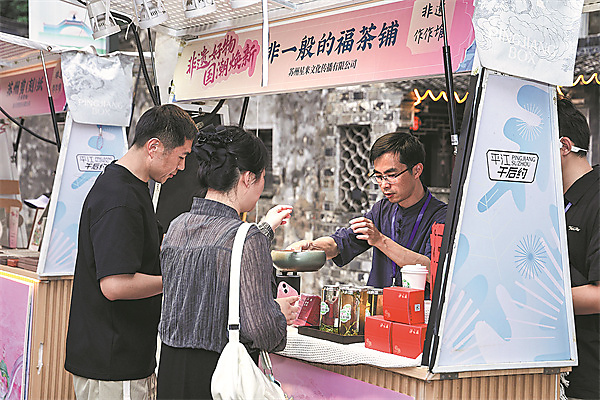 |
| A tea-making demonstration draws visitors to one of the many heritage display booths during the event. [China Daily] |
Her first generation of plush noodle bowls attracted attention but struggled to sustain sales due to their relatively high price. Several rounds of redesign followed.
A second version added practical functions, such as card holders. The breakthrough came when Zhou combined several fast-growing categories in China's creative cultural market — blind boxes, plush toys and refrigerator magnets — into a single product that was smaller, more affordable and easier to collect.
Since the launch of the latest version in early 2025, sales have exceeded expectations.
She has since expanded collaborations with local brands, including Renchangshun, a traditional Suzhou pastry maker with a history stretching back more than two centuries. Together, they transformed products such as dingsheng gao and zhuangyuan gao, pastries associated with good fortune and academic success, into plush collectibles.
"My role is to help people take notice. Once they're interested, they can learn more," she says.
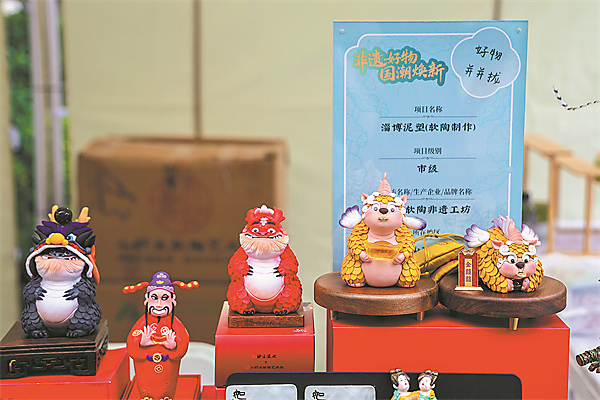 |
| Creative cultural products featuring Zibo soft pottery prove a hit with visitors at the shopping month event. [China Daily] |
A Broader Movement
Zhou's story reflects a wider transformation taking place across China's heritage sector.
This year's ICH summer shopping month places particular emphasis on connecting traditional culture with contemporary consumption. Alongside exhibitions and craft demonstrations, the event features activities exploring themes such as "ICH plus designer toys", "ICH plus fashion", and "ICH plus technology" — an acknowledgment that preservation today increasingly depends on finding new ways to engage modern audiences.
The shift is being driven in part by changing consumer behavior, particularly among younger generations.
According to leading online food delivery and local services platform Meituan, searches related to nationally recognized intangible cultural heritage food traditions exceeded 18 million in 2025, up 34 percent year-on-year. Orders placed with related merchants rose by 140 percent, while nearly two-thirds of searches came from consumers aged 20 to 35.
Industry observers say the figures point to a growing appetite for heritage experiences that feel interactive, accessible and relevant to daily life, besides those from the museums or textbooks.
A report on China's cultural and creative industries, released by China Cultural Media Group, notes that heritage-based cultural products are increasingly moving beyond static preservation toward what it calls "living innovation" and market-oriented development, allowing traditional culture to become part of everyday consumer experiences.
For entrepreneurs and inheritors alike, the question has now been how to translate them into forms that resonate with younger consumers.
Pony with Personality
About two hours north of Suzhou by high-speed rail, another experiment in heritage innovation has been unfolding in Zibo, Shandong Province.
Wang Zhi, a municipal-level inheritor of Zibo soft pottery, has spent more than a decade exploring ways to engage contemporary audiences with traditional clay sculpture.
Her studio is known for miniature works inspired by Chinese history, everyday life and classical art. But national attention arrived in 2024 with the debut of Long Dada, a dragon whose round body and playful expression challenged conventional depictions of the mythical creature.
The character quickly gained popularity online and helped Wang rethink how traditional culture could be presented to younger audiences.
Her latest creation pushes that idea further.
Known as Ma Biaobiao, or "Scruffy Pony", the figure was developed in collaboration with the Beijing Fine Art Academy and inspired by a late painting by renowned Chinese artist Qi Baishi, depicting the spirit and vitality of a galloping horse.
The pony features oversized eyes and a dramatically fluffy mane made not from clay but from Tan sheep wool.
Achieving the dynamic pose proved technically demanding. The sculpture's front legs touch the ground while the hind legs lift into the air, requiring repeated experimentation and an internal support structure capable of withstanding the firing process.
To strengthen the connection with the original artwork, the team designed the display so the pony appears to leap from a traditional Chinese scroll painting.
The feature that most captured public attention, however, was the mane.
Owners are encouraged to braid, curl, decorate, or style it however they wish.
"We call it co-creation," Wang says.
The idea extends beyond the product itself. The pony's name originated from internet users, who described the character using the Shandong dialect word biao, a term suggesting something goofy, impulsive or endearingly eccentric. The team adopted the nickname and continued refining the character in response to customer feedback.
New mane colors, accessories and design details emerged through interactions with fans online.
"We listen carefully," Wang says. That approach has helped transform a single clay sculpture into a broader cultural IP encompassing keychains, refrigerator magnets, bags, and apparel.
For Wang, the appeal lies in creating an emotional connection.
"Heritage isn't something frozen in time. It continues to evolve," she says.
Wang has thought a lot about what makes heritage stick.
"A friend once told me our works have a 'human touch'," she says."That phrase exactly woke me up. Intangible cultural heritage is about the warmth of the hand, the sedimentation of time, the power of healing, the possibility of co-creation."
(Source: China Daily)
Editor: Wang Shasha